Kerry-Lynne Findlay Is Right: B.C. Should Be at the Table for Western Energy
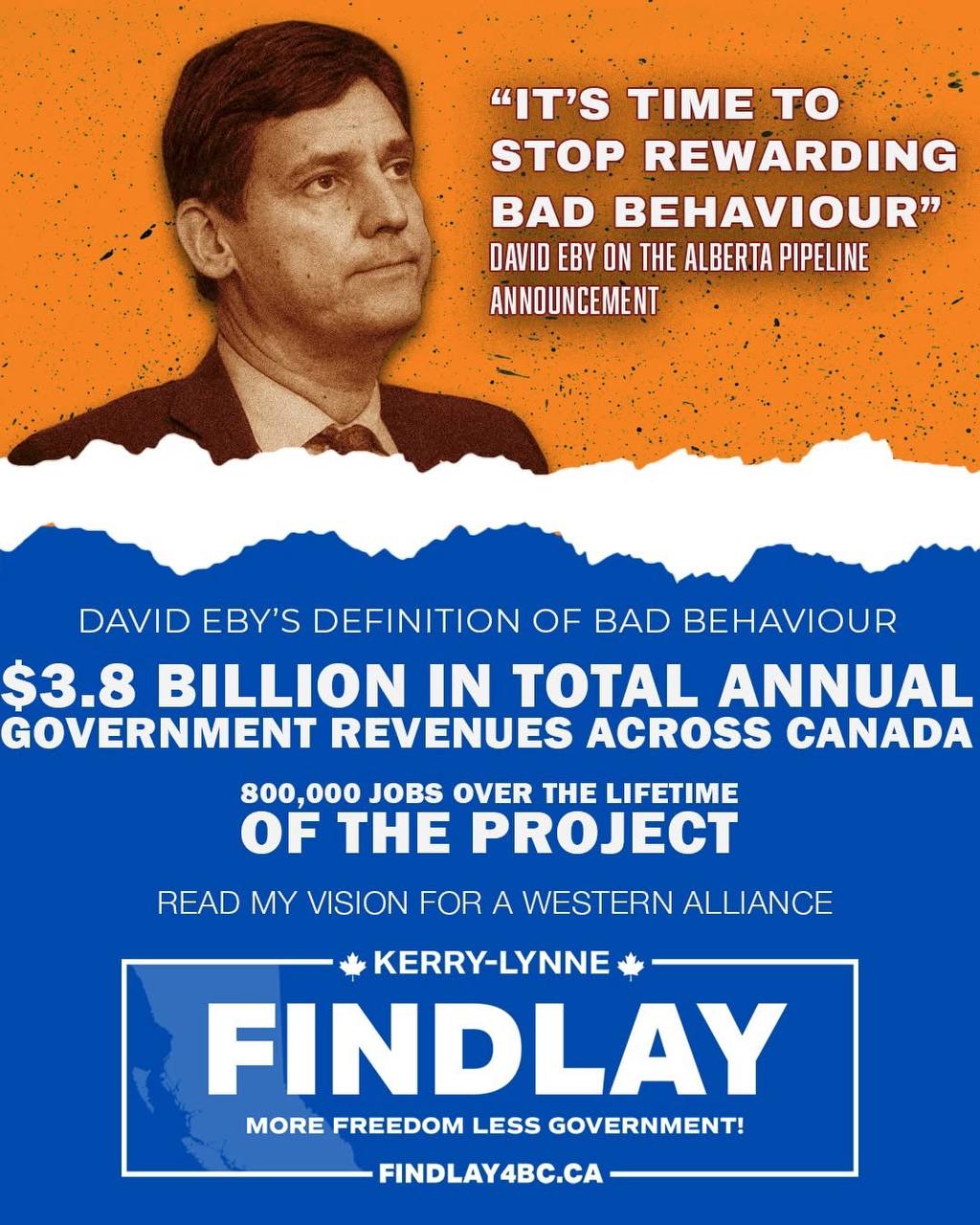
David Eby’s reaction to the Canada-Alberta pipeline push tells British Columbians a lot. When the federal government and Alberta talk about opening a new route to West Coast markets, B.C.’s premier should be asking how our workers, ports, communities and First Nations can benefit. Instead, Eby reached for a lecture.
In his May 15 statement, Eby said Canada should “stop rewarding bad behaviour” and criticized the federal government’s attention to Alberta’s proposed pipeline. He also repeated B.C.’s opposition to any repeal of the North Coast tanker ban.
Kerry-Lynne Findlay’s response is the stronger Conservative answer: British Columbia should not be the province that automatically says no while others build the future. We should be at the table, defending the environment responsibly, insisting on serious consultation, and making sure B.C. captures the jobs, port activity, construction work, Indigenous partnerships and long-term revenue that come with nation-building projects.
The West does not need to apologize for energy, resources, ports, mines, forestry, highways or rail. Those are strengths. A serious premier would turn those strengths into prosperity.
The exact economic impact of any future west coast pipeline will depend on route, capacity, ownership, approvals and market conditions. Alberta’s campaign for a new pipeline cites previous estimates of billions in annual government revenue and hundreds of thousands of jobs over the life of a project. Those numbers should be treated as estimates, not guarantees — but the broad point stands: access to tidewater is a major economic opportunity for Canada, and B.C. is geographically central to it.
That is why Findlay’s “Western Alliance” framing matters. British Columbia, Alberta and Saskatchewan have shared interests: getting Canadian products to global markets, building energy corridors, upgrading transportation infrastructure, attracting private investment and showing Ottawa that the West is not a problem to manage — it is an engine to unleash.
There is a positive Conservative message here:
- Build Canadian pipelines with world-class safety standards.
- Partner seriously with Indigenous communities instead of using consultation as a political excuse.
- Upgrade highways, rail, ports and industrial capacity so B.C. gets the work.
- Replace automatic obstruction with practical approvals and hard timelines.
- Make sure working families see real paycheques, not just government slogans.
Eby says B.C. has $88 billion in prioritized projects and wants Ottawa’s attention. Fine. But that is not an argument against Western energy corridors. It is an argument for a premier who can walk and chew gum at the same time: fight for B.C.’s projects, support Canadian energy access, and negotiate hard so British Columbians benefit.
Bottom line: Findlay is right to put opportunity back at the centre of the debate. British Columbia can be a gatekeeper, or it can be a builder. Conservatives should choose builder.